

NS: Hey Lucia, where do we find you right now — you’ve just been training down in New Zealand, right? Do you head that way most summers?
Lucia: I’ve just got back to Fernie after five weeks down in New Zealand. I’ve been heading down there for a compact stretch the last couple of summers, and I’ve found five weeks is pretty much the perfect balance — I still get to enjoy some Canadian summer, while also leaning into my skiing addiction!
The melting pot of talent down there is incredible. You’re surrounded by people from different countries, systems and backgrounds, and I always come home really inspired for the Northern Hemisphere winter.
I did the full back-to-back winter thing for a long time — 16 winters in a row, between Australia and Austria. That sounds slightly crazy now, but at the time I just couldn’t get enough. The amount of training, skiing and exposure to great people really accelerated my development as an instructor.
You’re from Scotland originally — did you grow up skiing there? Is that where your love of skiing started?
I did! I can still remember having my first lesson at Nevis Range when I was about six years old and it just making sense to me.
I have a bunch of brothers and we all got the bug. We couldn’t get enough of it — evening training on plastic slopes, weekends on the mountain, and then ski racing opened up trips to Europe. Back then we’d pile onto a bus with the ski club and travel out to Austria or wherever the training camp happened to be.
Looking back, I feel incredibly fortunate to have fallen into skiing that way. It became a huge part of my life before I was really old enough to appreciate where it might take me.
How did you get started as an instructor — and what did those early seasons look like?
I loved ski racing, but unfortunately I wasn’t very good at it, so eventually that had to come to an end!
I was staring down my first semester at university thinking, how am I possibly going to last this long without skiing? So that summer I headed to Australia for a winter season. At the time they ran hiring clinics where they skied with you for a few days and decided whether they wanted to take you on. I got the job, did my APSI Level 1 and jumped straight into teaching. Funnily enough, a bunch of us from that hiring clinic ended up working full-time in the ski industry for years.
The snow school director was Austrian, and we hatched a plan that allowed me to work in Austria during my university holidays as well. Getting through my second year at university was tough — I was studying psychology and only a small number of us were being admitted into the honours programme. I scraped through by the skin of my teeth, but afterwards I knew I needed a break.
I took a full year and just skied, worked and progressed through certifications in Australia and Austria. That year really cemented it for me: this was the world I wanted to stay in.
I went back and finished my degree because I wanted to see it through, but after that I never really looked back.
You’ve been part of the Nonstop family and coaching setup in Fernie for many seasons. What do you enjoy most about training Nonstop riders?
I’ve worked in a lot of places, and I genuinely think Nonstop is one of the most fun, high-quality and immersive programs out there.
The Canadian experience gives us this amazing opportunity to coach using the whole mountain. We can be working on skiing and technical development while getting out into the bowls and exploring incredible terrain with a group of people who are all there for essentially the same reason — they really love skiing and want to get better at it.
That makes it a pretty great coaching environment. And there’s a real sense of family around Nonstop, which I think stands out. People come for the skiing, but the experience becomes much bigger than that.
It’s a pretty hard job to beat.
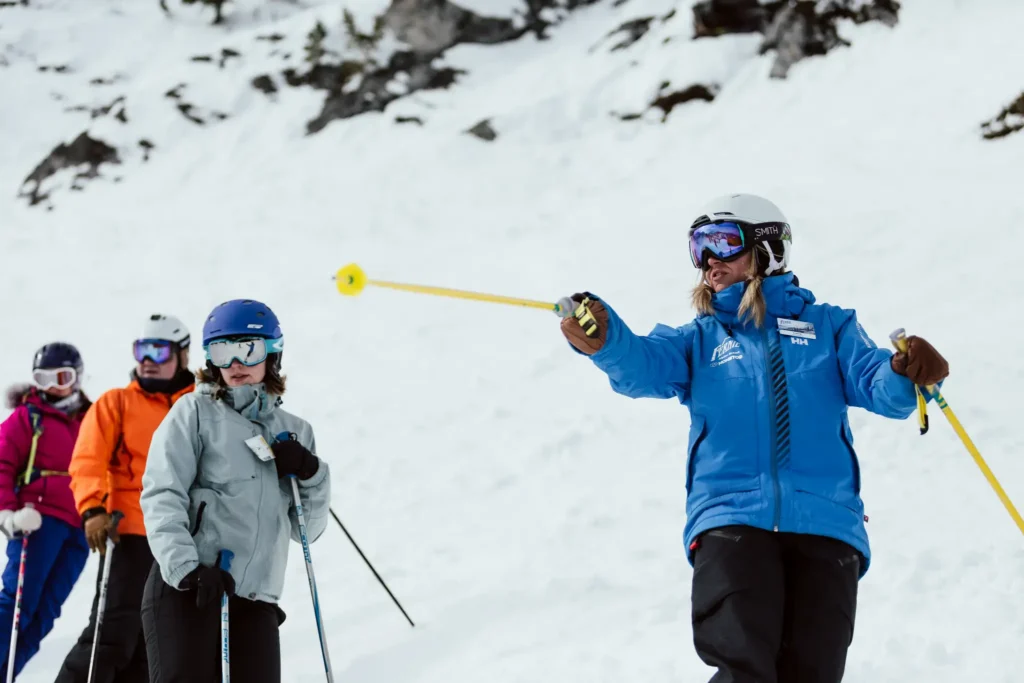
Fernie has been your home for a long time now, working for Fernie Winter Sports School — what is it about that place that’s kept you there?
The combination of the mountain and the town is pretty special.
Being able to live in a real mountain town and be seven minutes from the hill is soooo good. The terrain is beautiful, varied and genuinely pushes your skiing — there’s always somewhere that challenges you.
For me, Fernie has this perfect balance. It’s quiet enough that we rarely have serious lift lines, but the mountain still gives you that big-mountain feeling and incredible terrain. I’ve travelled and worked in a lot of ski areas, and Fernie is still the place I want to come home to.
What’s the best run in Fernie to train on? And your personal favourite zone for freeski laps on a pow day?
Cedar Bowl, without question.
It’s my absolute go-to because you can do almost everything in there. On a powder or freeski day, you can ski long, direct fall-line laps through steep, open trees. Then when it’s time to train, you’ve got Cruiser — which is anything but cruisy when you’re actually trying to crank it!
Having that combination in one zone is pretty hard to beat.
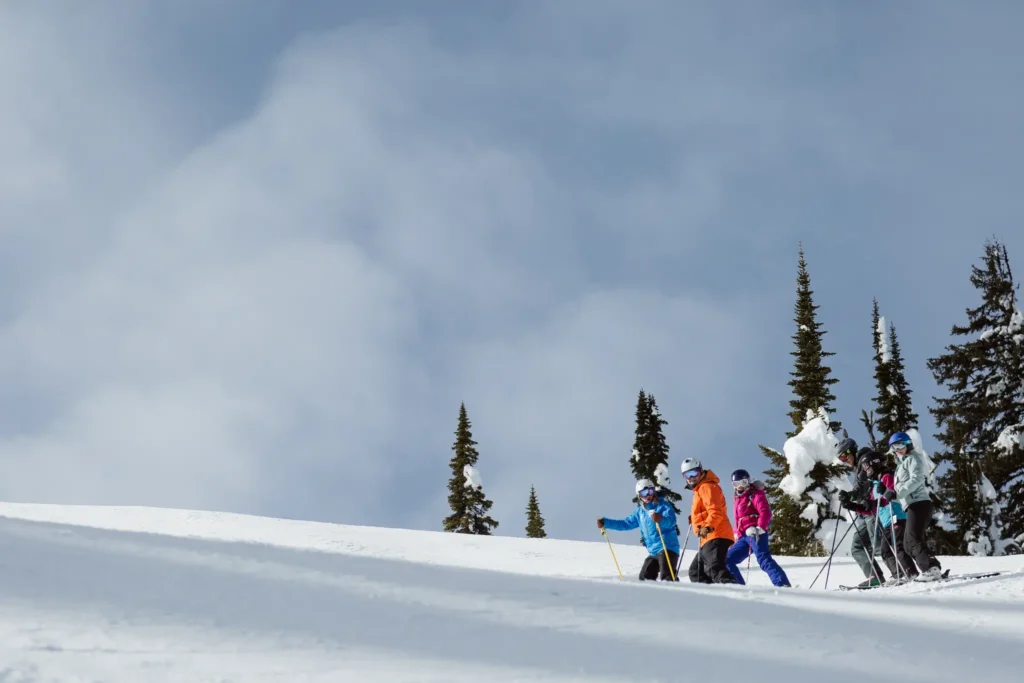
Besides Fernie, what’s your favourite place in the world to ski?
That’s such a hard question because every place I love is tied up in the experiences I’ve had there — it’s never just about the mountain.
Treble Cone, where I’ve just been in New Zealand, might arguably have the best view from a ski hill I’ve ever seen. I lived in St. Christoph in the Arlberg in Austria, where the accessible off-piste terrain was just insane.
But one place I think is really underestimated is the Engadin Valley around St. Moritz in Switzerland. It’s high, the infrastructure is fantastic, it’s rarely crazy busy, the pistes are amazing, the terrain is huge, and you have four or five different areas to go and play in. What’s not to like?
You hold Level 4 in multiple systems, including CSIA. What has that journey looked like, and what drives you to keep pushing?
I was working through the Austrian and Australian systems at the same time, and they complemented each other really well. The Austrian system gave me a strong grounding in technical skiing and mountain knowledge, while the Australian APSI system brought a different teaching focus. Together, they gave me a really good foundation.
There was never a grand plan to collect Level 4s! Mostly it came from curiosity and wanting to get involved in the places where I was living and working. Reaching the highest certification in a country also starts to take you behind the scenes — training other instructors and becoming part of the development of that system.
When I was Technical Director of a ski school in the Engadin in Switzerland, for example, it felt natural to go through the Swiss system so I could speak the same language as the instructors I was training.
In some ways, though, getting my first Level 4 felt more like the beginning than the end. I remember thinking, ‘OK, now I’m actually a ski instructor’! I’ve tried to keep that learning mindset ever since.
For me, striving for excellence is what keeps it interesting. Skiing happens in such an open and constantly changing environment that there is always another layer. I’m still chasing making that left turn and right turn just that little bit better.
In your view, is there such a thing as mastering skiing, or is there always more to chase?
I definitely think there are masters of skiing. You can see examples across every part of the sport — freeride, freestyle, racing, or watch the Japanese Technical Championships. I spent some time skiing with a few of their top athletes in New Zealand recently, and what stands out is their ability to do exactly what they want on their skis, in almost any condition. That balance and adaptability is incredible.
Most of us are still a long way from that — and I think that’s a great thing. Who wants to be finished anyway? Learning and training a physical skill is addictive in the best possible way.
One misconception I hear a lot is people backing off from learning because they’re no longer in their twenties. We can continue learning physical skills much later in life than people sometimes give themselves credit for.
I, for one, am certainly not done. I’ve chosen my lane, I’m going to keep pushing it, and I’m stoked if other people want to come along for the ride.
At your level, how much of your development now comes from learning alongside and from other top instructors and coaches?
So much of it.
Everyone sees and experiences skiing slightly differently, so listening to what other great coaches and skiers are trying, adding and adapting is huge.
And honestly, watching amazing skiing still gets me fired up. Having a live, first-hand image of something I want to try to emulate is probably my biggest learning tool outside of video. Being around really good skiers makes you better.
You were selected for the Canadian Demo Team ahead of Interski 2027 in Vail, Colorado. Congrats, that’s a pretty big deal. For anyone who doesn’t know — what is Interski, and what does being on the team mean to you?
Thank you! For a ski instructor, it’s a pretty exciting thing. It means getting the opportunity to represent Canada at the highest international level of ski instruction — and importantly, that’s both skiing and teaching. You have to be able to represent both.
Interski happens every four years and brings nations from around the world together to share and benchmark their current technical and teaching concepts, philosophies and approaches. It’s an opportunity to show what your country is doing, but equally to look outward, learn from other nations and find inspiration for where the sport and the profession can go next.
For me, the whole thing connects to striving for excellence. Having a goal to work towards gives your training focus and direction — whether that’s another certification, making a team or something completely different.
So realizing this particular goal was definitely a bit of a wow moment for me.
What does preparation for Interski actually look like?
We meet for a series of three-day training camps over the two years leading into Interski.
Some of that is individual development — working towards the level and style of skiing Canada wants to demonstrate — and some is team skiing, including the fast, fun show component where we get to showcase our skiing together.
Then there is a lot of discussion, teaching and training: really honing in on what our message is and how we communicate it. We also have lots of touch points with other instructors and members of the organization leading into the event, which helps test and refine that direction.
One of the coolest things for me has simply been getting to spend time with such strong skiers and teachers and having everyone push each other. Getting the chance to feel like an athlete again and approach my training that way has been incredibly motivating.
How important do you think off-snow training and conditioning is to skiing at a high level?
It’s super important — although don’t get me wrong, I definitely didn’t take it that seriously during my first seasons instructing!
You can get a long way on reasonable fitness, lots of mileage and some ski talent, but looking back, I wish I’d taken more of an athlete-style approach earlier. Strength, power, mobility and conditioning all give you a bigger physical toolbox to work with on snow, and they also help you tolerate the sheer volume of skiing.
I imagine I’d be further along now if I’d figured that out sooner.
I had a ton of fun though, haha!
What’s your coaching philosophy — how do you think about helping someone improve their skiing?
You have to meet people where they’re at. It’s not about me or about imposing my idea of what their skiing should look like — it’s about what they want to be able to do. Sometimes part of my job is helping them figure out what that actually is.
I also don’t really see coaching as correctional. The way we move creates different outcomes on the skis. Understanding that relationship, and then developing the ability to move in a way that produces the outcome you want, is incredibly empowering.
That’s really the direction I try to take with my coaching: understand what we’re trying to achieve, understand what’s currently happening, and then help the skier find a way to bridge that gap.
What are the most common technical faults or barriers to progression you see, and what’s your approach to tackling them?
As I said, I try not to think of something simply as a “fault.” Usually what we’re seeing is the outcome of a particular way of moving.
One of the biggest barriers I see is people trying to change something in isolation without understanding the broader context. That can become both ineffective and really frustrating. Someone might spend weeks being told to “get lower,” for example, and then another instructor tells them to “stand up.” Without understanding why, those pieces of advice just sound contradictory.
That’s where the instructor has to provide the link between cause and effect. What are the skis doing? What movement is contributing to that? What do we want the skis to do instead?
When the coach and student can establish that together — and the skier can recognize what success both looks and feels like — that’s when people really start progressing.
You’ve trained and examined so many instructors over the years. What’s your advice for Nonstop riders heading into their Level 1 and 2 exams — what separates the ones who nail it from the ones who struggle?
On the skiing side, the people who really nail it tend not to train just to reach the standard — they try to ski past it.
Keep pushing your skills all over the mountain. Don’t just practice the exact task you think you’re going to be assessed on. Skiing different terrain, different turn shapes, different speeds and different conditions teaches you so much and gives you a much deeper skill set.
On the teaching side, pay attention to how your coaches work with other people, not just what they say when they’re coaching you. Listen to the questions they ask, what they’re watching for and how they adapt their approach from one person to another.
There’s so much learning happening around you if you pay attention to it.
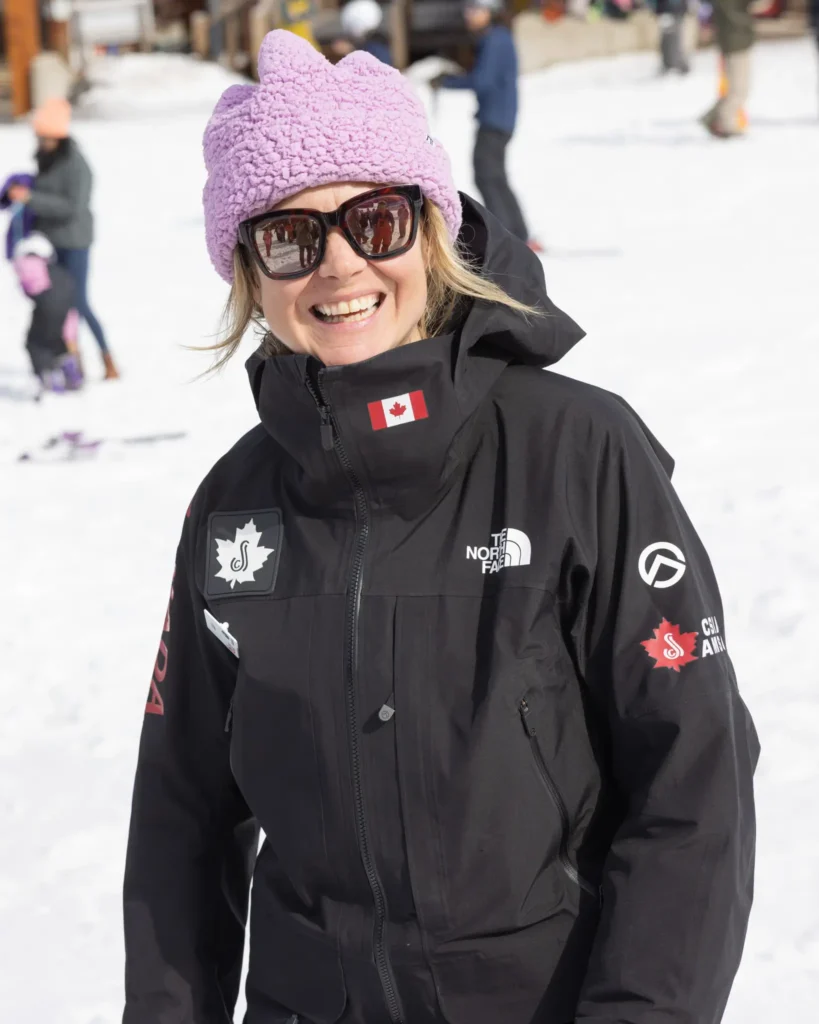
The CSIA system is one of the most respected in the world. What makes it distinctive — and what does progressing through the levels actually teach you?
CSIA has long had a strong student-centred approach to teaching rather than relying purely on a fixed progression.
That’s important because real guests don’t arrive conveniently at Step One of a predetermined sequence! Other than perhaps a true first-timer, people arrive with their own experiences, movement patterns, goals, fears, likes and dislikes.
The Canadian teaching methodology gives instructors tools to understand the skier in front of them, understand what’s happening with their skiing, and make effective decisions about how to help that individual progress.
Moving through the certification levels then takes you on a journey through increasing complexity — from understanding and teaching beginners, through intermediate and advanced skiers, and eventually working with experts.
By the time you reach Level 4, you’re developing a much deeper understanding not only of your own skiing, but of how to help a huge range of other skiers develop theirs.
As a woman who’s reached the top level of the industry, what’s your take on where women’s skiing and instructing is at right now?
It’s an exciting time.
Across snowsports we’re seeing women put down incredibly strong performances and push the level, and it feels like the culture around the sport is increasingly ready to celebrate and support some pretty badass female skiers.
I recently travelled to Austria as a coach for the first World Women’s Snowsports Summit, and it was incredible to meet women who had taken completely different pathways through different countries and systems but had all reached a high level within the industry. There was a lot of shared experience, but also so much to learn from the differences.
Ski instruction is an incredible career if you love people, learning and a physical challenge. I hope that by being visible and continuing to push myself, I can encourage more women not only to enter the industry, but to stick with it and progress into the higher certifications and leadership roles.
What advice would you give to a young instructor who wants to go all the way in this industry?
Stay open to learning.
Learning can be uncomfortable sometimes, and it’s very easy to become defensive when somebody challenges something you’ve worked hard on. Try instead to approach feedback with the attitude that you’re continually adding to your knowledge and skill set. Then feedback stops feeling like criticism and starts becoming an opportunity.
Make the effort to learn from the experienced pros around you. Watch them. Ask questions. Ski with people who are better than you.
And travel if you can. Work in different places, expose yourself to different systems and different ways of thinking — but also remember to enjoy where you are.
It’s a pretty wonderful life. Don’t get so focused on the next certification that you miss the places, people and moments you get to experience along the way.
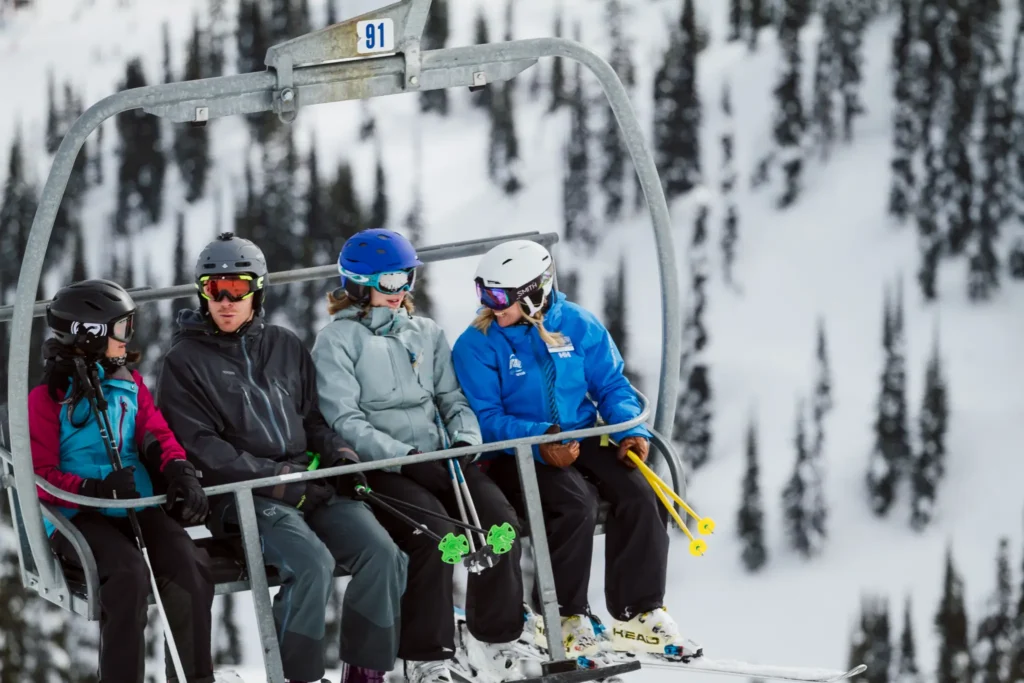
What’s next — beyond Interski?
Good question!
This year is going to be a big one, and right now I’m pretty happy to be on that train. Being part of the Interski journey has actually helped me reconnect with a sense of purpose — that what I’m doing and what I’ve learned might have an impact beyond just my own skiing.
Beyond that, I’m excited to keep learning, keep coaching, and keep seeing where all of this takes me.
And, of course, I’m going to keep pushing this whole going-left-and-right thing and see just how good we can get at it.
Thanks, Lucia. Good luck with Interski. And catch you in Cedar Bowl.
If Lucia’s story has got you inspired to chase a career as an instructor, or just push your skiing to the next level — our ski instructor courses and ski camps are where it starts.